Ranked Among Australia’s Top 20 Corporate Training Providers (2026): View Courses

Conflict in the Workplace – Cost and Causes
Workplace conflict is one of those things nobody likes to talk about but almost every organisation deals with it at some stage or another.

Whether it’s tension between team members, a breakdown in communication between departments or a manager struggling to handle a difficult situation, unresolved conflict doesn’t just make work unpleasant. It drains productivity, damages morale, increases staff turnover and left unchecked, can expose your organisation to serious legal and HR risk.

The good news is that Conflict management is a skill and like any skill, it can be learned.

Why workplace conflict happens

Conflict rarely comes out of nowhere. It usually builds over time from a combination of mismatched expectations, poor communication, competing priorities or personality differences that nobody has been equipped to navigate. In busy workplaces, where people are under pressure and deadlines don’t stop, small tensions can quickly escalate into something much harder to resolve.

The most common triggers we see in Australian workplaces include unclear roles and responsibilities, perceived unfairness in workloads or recognition, communication breakdowns between teams, and changes in leadership or organisational structure.

The real cost of unresolved conflict

Many organisations underestimate just how much conflict costs them. Beyond the obvious impact on team morale, research consistently shows that managers spend a significant portion of their working week dealing with conflict-related issues, time that could be spent leading, growing and developing their teams.

Staff who feel caught in ongoing conflict are also far more likely to disengage, take sick leave or resign altogether. Replacing an employee costs on average between 50% and 200% of their annual salary when you factor in recruitment, onboarding and lost productivity. Investing in conflict management training is significantly cheaper than the alternative.

What conflict management training actually covers

Effective conflict management training isn’t about teaching people to avoid disagreement. Healthy disagreement is actually a sign of an engaged, thinking team. It’s about giving your people the skills to handle differences constructively, before they escalate into something damaging.

At CTO, our Conflict Management workshop covers:

  • Understanding the nature and root causes of workplace conflict
  • Identifying the early warning signs before things escalate
  • Replacing reactive responses with a calm, strategic approach
  • Honouring the legitimate perspectives of others, even when you disagree
  • Turning disagreements into opportunities for learning and growth
  • Following through on resolutions so the same issues don’t resurface

It’s a one-day, practical workshop delivered onsite at your workplace or online — and every session is customised to reflect the real situations your team faces.

Who is conflict management training for?

The short answer is – Everyone. But it’s particularly valuable for team leaders and managers who are expected to resolve conflict between others, HR professionals managing workplace disputes, frontline staff in high-pressure customer-facing environments and any team going through significant change or restructure where tensions tend to run high.

A small investment with a lasting impact

One of the things we hear most often after a Conflict Management workshop is “I wish we’d done this sooner.” The skills your team takes away don’t just improve the immediate situation – they change the way people communicate and collaborate long term, creating a healthier, more resilient workplace culture.

If your team is experiencing tension, or you simply want to build their capability before conflict becomes a problem, we’d love to help.

CTO’s Conflict Management training is available onsite at your workplace or online, across all major Australian cities and regional locations. Every workshop is customised to your organisation’s specific needs.

Change is Inevitable – Are your Leaders ready?

Why the human side of change matters more than ever in the age of AI

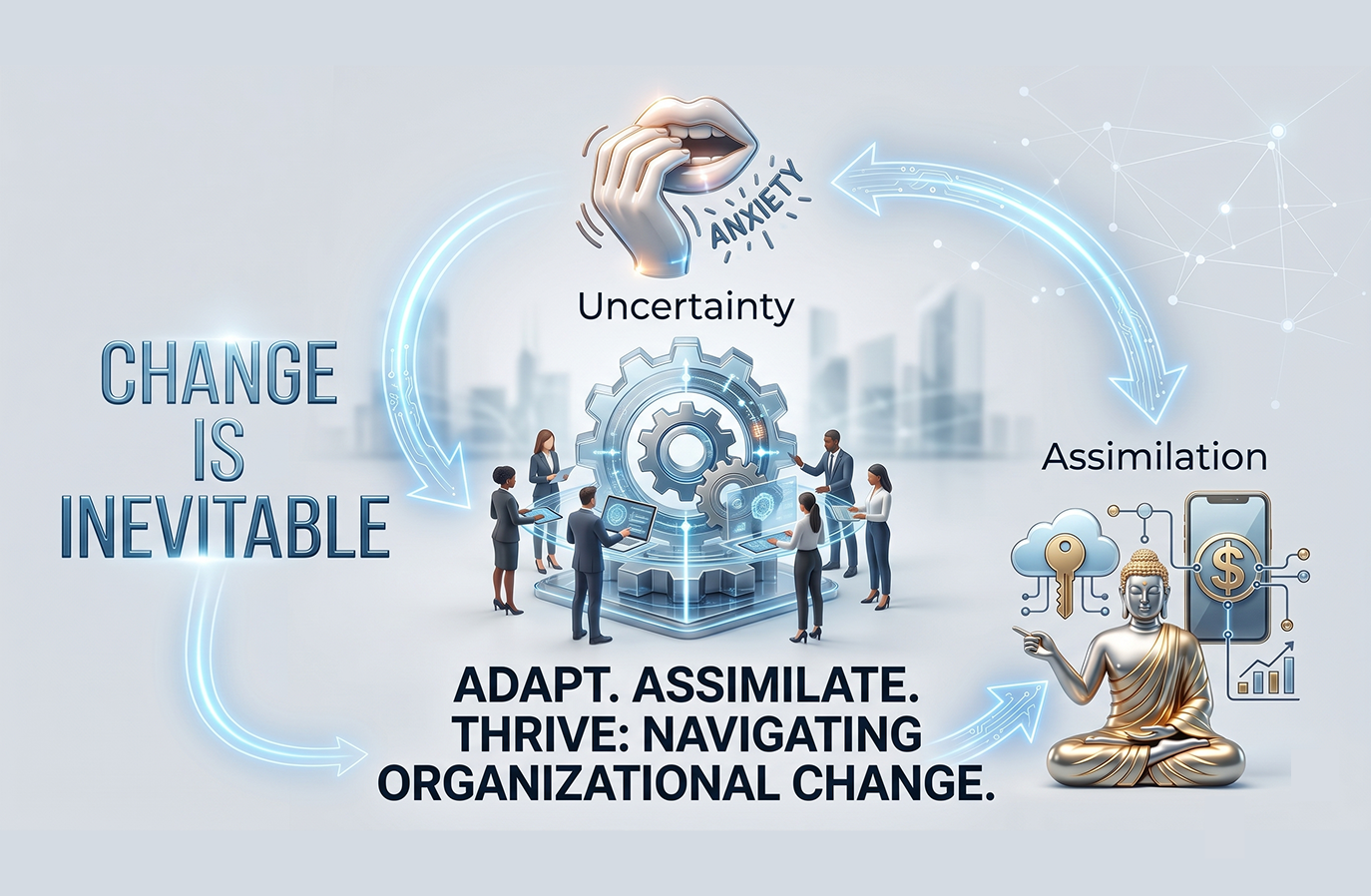
Change is one of the few things in life that is truly inevitable. Whether it’s a shift in leadership, a business merger, a team restructure, a new direction in strategy, or as of right now – the rapid rise of AI in the workplace. Change has a way of stirring something deep in all of us.

And here’s the thing, it doesn’t matter how well-planned the change is or how logical the business case looks on paper. If the people side of change isn’t managed well, even the best strategy can quietly fall apart.

This is because change is never really about the process. It’s always about the PEOPLE.

We’ve Been Here Before

Think about the last time your organisation went through a significant change. A new leader at the helm, a merger, a restructure, a shift in company direction. Even when the change made complete sense, there was almost certainly a period of uncertainty, resistance or anxiety among the team. That’s not a sign of weakness. That’s human nature.

Every generation has faced waves of change that felt overwhelming in the moment — the industrial revolution, the arrival of the personal computer, the internet and now AI. Each time, people worried about what they stood to lose. And each time, new opportunities emerged that nobody had even imagined yet.

The organisations that navigated those shifts well all had one thing in common, leaders who understood that managing change means managing people first.

Let’s talk about Technology change

When organisations roll out new technology whether it’s an AI assistant, a new software platform or an automated workflow, the technical implementation is rarely what causes the most headaches. What causes the most headaches is people.

Not because people are resistant or difficult but because change triggers something very human in all of us. Uncertainty. Fear of the unknown. A sense of losing control over something familiar. These are natural, normal responses and they’re exactly why change management needs to be about behaviour first and technology second.

When a team member hears that AI can now research, write, analyse data and draft documents in minutes, their first thought probably isn’t “great, more time for strategic work”, it’s more likely “Is my job safe?”

That’s the conversation leaders need to be ready to have.

What AI Actually Does to Jobs

Let’s take a real example. A marketing coordinator who used to spend half their week researching competitors, drafting content and formatting reports can now use AI tools to do all of that in a fraction of the time. Does that mean they’re no longer needed? Absolutely not.

What it means is that their job gets better. The repetitive, time-consuming tasks that were quietly draining their energy? Gone. Now they can focus on the work that actually requires a human. The creative thinking, the relationship building, the strategic decisions that no AI can replicate.

The same is true across industries. AI doesn’t replace the human – it amplifies what the human is capable of. But only if the human is ready to embrace it.

What do Leaders need to do?

This is where leadership becomes absolutely critical. Because if leaders don’t actively manage the human side of this transition, the fear and resistance will quietly undermine even the best technology rollout.

Great leaders in times of change do three things really well:

They communicate early and often. Not just what is changing, but why and what it means for each person on their team.

They acknowledge the emotional journey. Change isn’t just a logical process, it’s an Emotional one. People need to feel heard before they can move forward.

They focus on opportunity, not just transition. Helping their team see what’s possible on the other side of change, not just what’s being left behind.

Change Needs More Than Good Intentions

It’s easy to assume that if the change is positive and the communication is clear, people will simply come along for the ride. But in reality, change requires far more than a well-written email or a town hall meeting. It requires intentional leadership. Leaders who can read their team, respond to the emotional undercurrents and guide people through the uncertainty with genuine care and skill.

Without that, even the most well-resourced change initiative can stall. Not because the strategy was wrong but because the people weren’t brought along for the journey.

The organisations that will come out ahead – whether they’re navigating a merger, a leadership transition, a cultural shift or the rise of AI in their workplace won’t necessarily be the ones with the best plan. They’ll be the ones with the best-equipped leaders. People who understand human behaviour, who can hold space for uncertainty and who know how to turn disruption into opportunity.

Ready to equip your leaders for the changes ahead?

CTO’s Change Management – Leading through Organisational Change program gives leaders the practical skills they need to guide their teams through uncertainty with clarity and confidence.

Get in touch with us today to find out how we can support your team through the next change that comes along.

Let’s stay curious and keep growing.

3 Time Management tools to boost productivity

Our time is finite, so all of us must use it well. There are only 24 hours of time allocated to us each day.  And in our fast-paced world, it is easy to become overwhelmed with information, people, tasks and responsibilities.  Sometimes, it can all get the better of us.

Without effective knowledge, strategies and tools, poor time management can easily lead to stress and discomfort. So, if you would like to improve your time management and productivity skills, one of the first things you should do is assess the tools you are using.


3 Time Management Tools You Can Use Every Day

Your To-do List

If you only use one time management tool, this is the one you need. Spend the first 20 minutes of your day, every day, to plan your day. Every task must be set around a realistic and achievable timeframe.

One of the key principles of a good To-Do-List is to keep it short.  Try writing down only 3 things you would like to achieve today.  Then tick each of them off as they are achieved.  With all the interruptions to our busy schedules from emails, phone calls, meetings, and workmates, family and friends, sometimes achieving just three things per day can be a mammoth effort.  However, you will soon begin to notice the difference that writing down and achieving 3 daily tasks will make to your life.


Calendars

Calendars are essential to tracking, planning, and scheduling your time. How can you manage your time if you don’t know how and where you are spending it?

Schedule specific times of each day to work on tasks or projects, and block that time out on your calendar. Never rely on your memory for your appointments with others or yourself.  Always build buffer times around appointments in your calendar, to account for travel time, preparation time, and follow up time.


Notebooks – online or on paper

You need one place where you keep all of your notes, and one place to go looking when you need to retrieve a piece of information. Document every thing that you feel is important.

It doesn’t matter whether your tools are paper or app based, as long as you have them, and use them. Know and understand that the day will rarely go as you had planned. Emergencies will pop up and unexpected events may change your course and direction. Just keep focusing on the bigger picture and keep moving forward by focusing on what’s most important.


_

Time Management training from CTO will provide you with skills to help you determine how you presently use time; teach you how to make the most effective use of your time; and allow you to use your time the way you choose – for work, rest or play.

To find out more about our Time Management courses please click here.


About Corporate Training Options

Corporate Training Options is an Australian Professional Development Training Company, incorporated in 1992.

Our customised Professional Development courses are available Australia-wide, for business executives and corporate teams, and provide a cost-effective way of ensuring you and your staff are presenting your best image to the world.

CTO Professional Development Training courses are customised to meet your requirements, and your training is provided on-site, on dates which suit you.


For more information on the range of Corporate Training Courses available, please visit the CTO website here


Rosy King

Corporate Training Options

Professional Training  –  Exceptional Results


E: training@cto.com.au

W: cto.com.au


Are you Ready to be a Great Supervisor?

Are you ready to be a Great Supervisor?

Do you think you are ready to be a Great Supervisor?

Be a Great Supervisor
CTO Training Courses will teach the the skills to be a Great Supervisor

What happens when you finally get promoted to a supervisor role but feel like you’re not ready?  Supervision skills might not come naturally to you, and will instead need to be learned.  It’s human nature to expect a promotion or a leadership role after several years of working in one position. The problem is the promotion might come sooner than you expected and catch you unaware.


The good news is Corporate Training Options (CTO) specialises in training people in the professional development skills that are essential for the growth of a business and its teams.  CTO presents professional training courses that can teach you the qualities, duties and responsibilities of a great supervisor. Your Manger promoted you because he or she saw what you might not see yet – the ability to be a great leader for your team. It’s time for you to prove to everyone that you deserve the promotion.


The Excellence in Supervision course from CTO can really help you to improve your leadership skills and give you the confidence to become a great supervisor.

These are the skills you will gain when you complete this course with CTO:

  • Understand the roles and responsibilities of a supervisor
  • Understand the principles and processes of performance management
  • Learn how to communicate effectively with your managers, peers and employees
  • Understand the reasons why effective coaching is advised if you want to increase your team’s productivity and boost their confidence
  • Learn essential skills to handle difficult situations and challenging events like organisational changes


Leadership Skills

As a supervisor, you are expected to possess certain leadership qualities. Here are some of the leadership skills that can contribute greatly to your excellence in supervision.


The ability to stay positive at all times

One of the best qualities of a great leader is his or her ability to stay positive and respond positively to any situation, even the most difficult ones. As a supervisor, you will face many challenges that require you to remain calm and act positively. This doesn’t mean that you should overlook the bad things; just that you should not allow them to disrupt you or lower your spirits. Learning to remain positive as you work your way through a difficult situation is one of the best ways to become a better leader and to motivate and inspire your team.


Appreciate your team

Your Corporate Training Options professional trainer can teach you how to appreciate your staff. It’s important to recognize and reward employees that do a good job. You should also reward the employees who try really hard, even if their hard work doesn’t pay off as expected.  Occasional events such as birthdays, successes and victories should also be celebrated. When you recognise people, you make them feel special and appreciated.  You make them feel valued as part of your team.


Effective communication skills

For you to be a great leader, you must learn how to communicate clearly. To improve your excellence in supervision, you have to develop certain communication skills. Great supervisors know how to give clear instructions, clarify any issues that may cause problems and interact with employees freely to make sure that they have understood their tasks.

As a leader, you must learn how to take responsibility whenever things go wrong. In order to reduce the possibility of your team making mistakes, you should always give clear instructions, and ask for feedback to ensure the instructions have been understood.


Learn how to trust your staff

In order for your team to perform well and increase their productivity they must feel appreciated and trustworthy. It’s important to understand your staff and give them space to complete their tasks in ways that they see fit. This will make them feel they are trusted and important members of your team.


Connect with your staff

An effective leader is the one that has a relationship with his or her employees both inside and outside the workplace. You should take an interest in your team members, asking them about their lives, their families and their interests. Once in a while it’s wise to invite them for a coffee or just to hang out with you. Having open communication channels with your team freely makes them feel comfortable around you and able to speak freely if required. This is a great way to get to know your team better, see what they are capable of, and find appropriate positions for them at work.


Responsibilities of a Supervisor

Common supervisory responsibilities include:


Performance management

As a supervisor, you will be responsible for the day-to-day performance of a certain group of individuals. It may be a department, a team or a shift. In general, you are qualified to be a supervisor because you have experience and knowledge about what your team does. The management believes that you have earned this position and you are capable of leading the team. In this regard, it’s your responsibility to make sure that the members of your team are performing their tasks accordingly.


Effective coaching skills

As a supervisor, you will be expected to train your team to ensure that they are properly trained for their tasks. It’s your responsibility to make sure that your team is productive. Effective coaching helps to increase employee satisfaction and improves productivity.


Ability to deal with organisational changes

Once you are promoted to a supervisor position, it means that your superiors trust you and believe that you can handle the team that you are tasked to supervise. Of course, there will always be challenges and organisational changes, and you need to be prepared for these, and have the necessary skills to deal with these changes positively. It’s always important to respond to any situation or challenge positively.


Conclusion

Effective, personalised coaching, either as an individual, or as part of a group, is a highly recommended way to gain leadership skills. It gives you and your team a great opportunity to evaluate your style of leadership and receive really honest feedback.


The Excellence in Supervision training offered by CTO will give you a chance to improve your leadership skills and take you down the path of becoming a great supervisor. So if you are a team Supervisor and are looking to improve your leadership skills, consider this course with Corporate Training Options.


For more information visit our website today at cto.noesis.chat/.


About Corporate Training Options

Corporate Training Options is an Australian Professional Development Training Company, incorporated in 1992.

Our customised Professional Development courses are available Australia-wide, for business executives and corporate teams, and provide a cost-effective way of ensuring you and your staff are presenting your best image to the world.

CTO Professional Development Training courses are customised to meet your requirements, and your training is provided on-site, on dates which suit you.


For more information on the range of Corporate Training Courses available, please visit the CTO website here


Rosy King

Corporate Training Options

Professional Training  –  Exceptional Results


E: training@cto.com.au

W: cto.noesis.chat/